Archaeology
About
The Civil Administration's Archaeology Unit works to preserve and promote antiquities in Judea and Samaria
The Archaeology Unit is tasked with the enforcement of the Antiquities Law. The unit is responsible for historical sites in Judea and Samaria, pursuant to the Antiquities Law, which is applicable to the region. The region of Judea and Samaria is home to over 2,600 archaeological and historical sites. Many of these sites are among the most significant sites within the history and culture of the region and the world at large. They form the cornerstones of Jewish, Christian, and Islamic history.
Some of these sites include:
The Qumran Caves, where scrolls hidden in the Judean Desert for over 2,000 years were discovered, thus providing the most ancient Biblical testimony available to date in the Hebrew language
Shiloh, the first religious center of the nation of Israel
Shomron (Sebastia), the capital of the Kingdom of Israel
Herodium, ancient town and palace fortress built by Herod the Great
The Hasmonean Palaces, consisting of Hasmonean and Herodian buildings dating back to the Second Temple Period
The Kypros fortress and the Phasael Tower that were founded in the days of King Herod
The Second Temple period aqueducts to Jerusalem (the Biar Aqueduct and the Al-Arub Aqueduct)
Susya, the ancient Jewish city from the period of the Mishna and the Talmud
The Tomb of Samuel
The Cave of the Patriarchs
Tel Hebron, containing remains of Jewish settlement dating to the Canaanite period
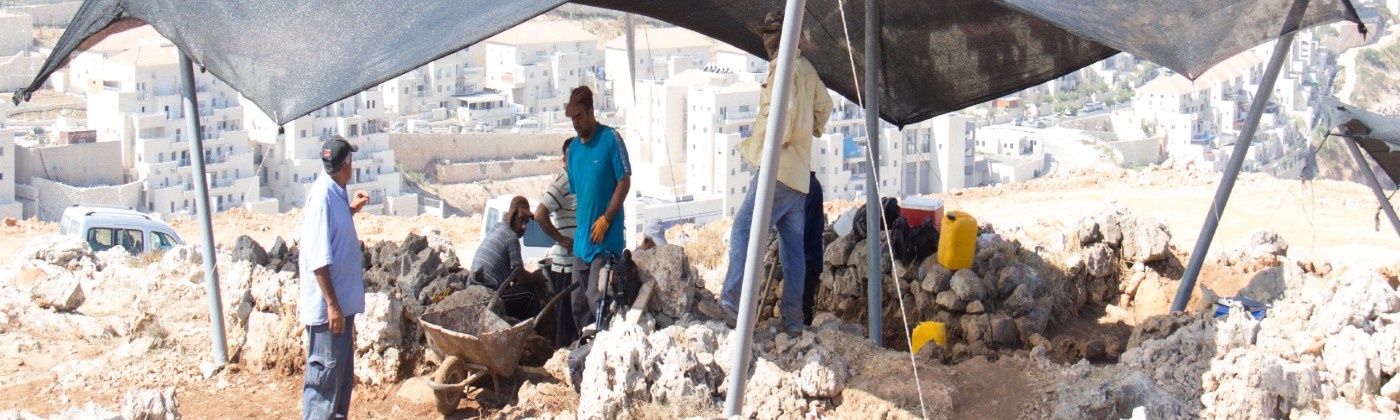
The Archaeology Unit works toward preserving, maintaining, and developing sites and facilitating accessibility to the public at large. The unit regularly carries out rescue excavations prior to the initiation of infrastructure work, planned excavations, scientific-archaeological surveys in cooperation with academic institutions, and community excavations in cooperation with youth groups, pre-military preparatory programs, and educational institutions. Among the unit's main tasks are the preservation of artifacts, as well as the prevention of the illegal trade of antiquities, site destruction, and illegal construction within the confines of ancient sites. Artifacts discovered in excavations undergo a restoration and preservation process and are stored in the unit's offices. These artifacts serve as a broad-based foundation for academic research and are exhibited in museums throughout Israel and around the world.
Areas of Responsibility and Services
Protection and supervision of archaeological and excavation sites in the Judea and Samaria region
Prevention of antiquities theft and trafficking
Granting approvals to civil and military entities for infrastructure work at antiquities sites
- Issuance of licenses for archaeological excavations and scientific surveys
Execution of standard excavations and rescue excavations at archaeological sites
Establishment of a scientific archive
Development and maintenance of sites, and preparation of sites for visitors
Establishment of archaeological, historical, and ethnic museums
Collaboration with academic institutions in Israel and abroad
Publication of scientific articles on archaeological and historical topics
Roles and Positions
- Civil Administration Archaeology Staff Officer
Benyamin Har Even
Contact Us
-
Email[email protected]
-
Tel
-
Additional telephone number
-
Fax02-6599133
-
Call center operating hours
- 08:00-17:00